
Teeko & Diamond Ortiz – Real Ones (SFC) – NTTG-001 – 7″ 45rpm
Our first limited release with Teeko featuring Diamond Ortiz.
Scheduled for official release on Friday, Dec. 16th. Items will ship on Tuesday, December 13.
.
ABOUT THE RELEASE

Teeko is a San Francisco based producer & DJ and half of the the future funk duo Starship Connection. On this collaboration he’s joined by native Bay Area funkster Diamond Ortiz (MoFunk) for a fine serving of synthesized boogie/funk fresh out of California. Teeko performs on a Roland JX3P, Mini-Moog Voyager, & Talkbox. Diamond Ortiz performs vocals with a Microkorg XL with a Rocktron Banshee Talkbox. Real Ones is a lively vocoder slapper written & performed by Teeko with DJ friendly instrumental on the B side.
UPCOMING EVENTS
| Date | Artist | Location | Venue | Time |
|---|---|---|---|---|
| 12/1/16
12/3/16 12/5/16 12/6/16 12/8/16 12/9/16 12/10/16 12/14/16 1/14/16 03/10/17 |
Aki Kumar
Diamond Ortiz Aki Kumar Aki Kumar Aki Kumar Aki Kumar Allen Johnson RyStylz, Basura, Allen Johnson, Dave Ma Aki Kumar, Basura, David Ma, Allen Johnson Teeko |
Campbell, CA
Los Angeles, CA Aptos, CA Fremont, CA Campbell, CA Martinez, CA San Jose, CA San Jose, CA San Jose, CA San Francisco, CA |
Little Lou’s
EICid Aptos Street BBQ Mojo Lounge Little Lou’s Armando’s Headley Club Cafe Stritch Cafe Stritch Mezzanine |
7:30 PM
9:00PM 6:00 PM 8:00 PM 7:30 PM 8:00 PM 9:00 PM 9:00 PM 9:00 PM |
MUSIC BITES
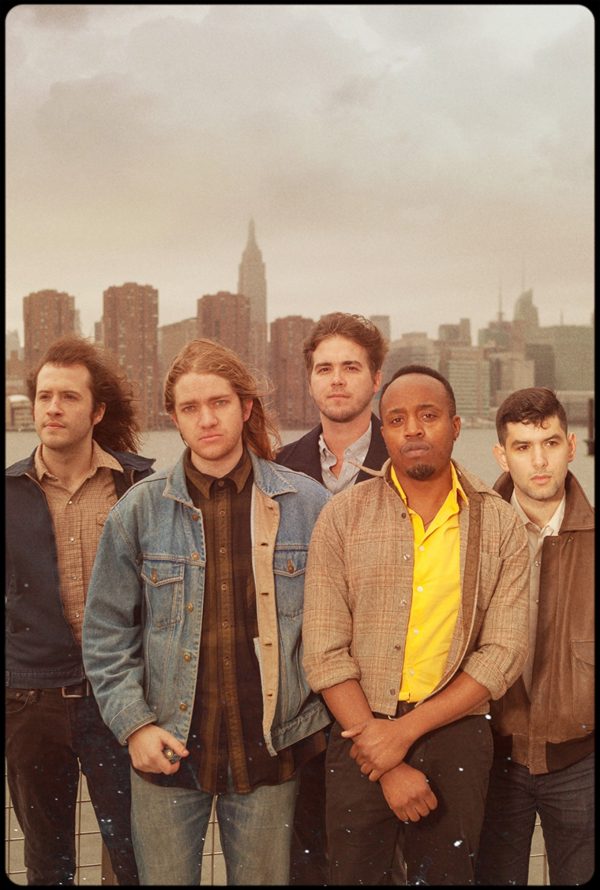
Come See About Me: Durand Jones & The Indications’ New Soul For Old Souls
By David Ma and Brandon Roos
Vocalist: Durand Jones
Vocalist / Drummer: Aaron Frazer
Guitarist: Blake Rhein
The origin story for modern soul heavyweights Durand Jones and the Indications emerged out of what can be considered divine timing. Vocalist Durand Jones is now best known for his gruff delivery and hair-raising yelps, but he arrived at Indiana University, where the band formed, to study saxophone. Even that part of the equation wasn’t planned. While pursuing his undergrad at Southeastern Louisiana University, the Louisiana native had no intention of moving to the Midwest until IU’s saxophone department head personally persuaded him to relocate to Evansville, IN.
While in grad school for classical saxophone and coaching horns at the school’s renowned IU Soul Revue, Jones was poached to sing because the group was short on vocalists. He had familiarity singing in the church growing up, but it hadn’t been a musical focus for years. Blake Rhein, the Indications’ guitarist, was a recording engineer on those rehearsals.
To blow off steam, Rhein invited Jones over to listen to records. What started with 45s and drinks evolved into a weekly jam session, and organically yielded the group’s 2016 self-titled debut, an eight-song soul statement gloriously lost in time. The debut was a grassroots success story, with momentum gained, in the group’s words: “On the back of the band’s booming live shows and the enthusiastic recommendation of independent records stores across the country – who moved thousands of copies by simply playing the hell out of the LP in their shops for their discerning customers.” Drummer Aaron Frazer’s striking falsetto also emerged as a sharp contrast to Jones’ vocals, adding a pronounced distinction to their already balanced output.
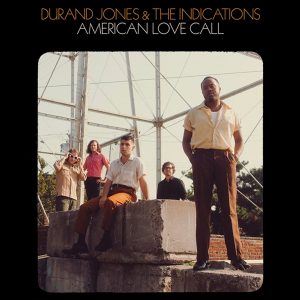
New single “Morning in America” finds Jones struggling with hope in a modern homeland struggling to unify. “And in towns across the country, it’s color that divides / When in working men and ladies, we can find our common side,” he bemoans before heading back to tune’s mournful chorus: “It’s morning in America, but I can’t see the dawn.” The track is the latest preview from their sophomore effort, American Love Call, out March 1.
Needle to the Groove spoke with select members of the Indications in advance of their upcoming Bay Area performances. They shared their surprises on tour, the varied musical roots that inform their dynamic sound, and new directions the band is headed with their new album.
Firstly, thank you for your time fellas. We love the first album, it gets a lot of play around here. What are your personal favorites from it? What was the recording process like? Would you have done anything differently?
Blake: “I Can’t Keep My Cool” is one of my favorites. I love Durand’s performance on that recording and it’s so much fun to play that one live. On the first record, we were writing a lot of the songs as we were recording them. We did the whole thing in Aaron’s basement, working with very limited set of resources, which definitely gave that record a distinct sound.
On American Love Call, we wanted to push ourselves as songwriters and producers. We wrote and demo’d a lot of songs that we whittled down to the twelve that ended up on the album. Working with a string section and harpist was a huge learning experience for me. Although we had more resources on this record, we still maintain over a lot of the philosophy and techniques that made the first record special.
You guys had a tremendous year following the release, more gigs and acclaim than ever before. How has adapting to constant life on the road impacted you personally? As a modern soul troupe, what locations surprised you the most?
Aaron: We’ve been all over the place – headlining tours, festivals, the occasional support slot – but it feels great to see that work paying off. Life on the road is a blast but a grind. We’ve met so many amazing people around the world, all bonded by a love of soul music. We’re so lucky to be a part of this community that spans the globe but somehow feels like a small town. The tricky part is finding a bit of personal space, even if that means noise-canceling headphones in the van, and dealing with some grueling drives. San Antonio was a place that, when we started touring, we had no idea was such a hub of soul music. But the people there are so passionate and proud of their musical heritage, and it holds a special place in our hearts. I was also really surprised when we came through Visalia, CA. I wasn’t familiar with the town, and it was much smaller than other cities we were playing, but the crowd was hype!
During a recent performance on KEXP Durand said, “Those church musicians down in Hillaryville, Louisiana played such a huge role in how I sing today.” Who are some of these quiet mentors you’ve learned from while in attendance? What particular memories, if any, do you carry with you?
Durand: Ms. Dawn Shivers comes to mind. A strong alto voice. When she had heard that I started singing in nightclubs, she drove over to my Dad’s trailer and told me to “Never forget God.” She kept repeating, “God you promise us!” I’ll never forget that, rest in peace. She had a voice I really admired. I looked up to her.
Other folks like this man by the name of Hardino who didn’t sing in the choir but when the spirit called upon him he would rise from his seat and shout and growl, “Ooooooooooo Lord I Got To Lay My Burdens Down!” As a child it was the scariest, bone-chilling thing. I still try to this day to mimic the sound but I’m not as powerful as ole Hardino, rest in peace. And then there was Troop, the last cowboy in Hillaryville [Louisiana, Durand’s hometown]. He sat way in the back and couldn’t sing but could throw his voice. He was amped up in church. I think I learned the art of throwing [my voice] from him and other country folks there.
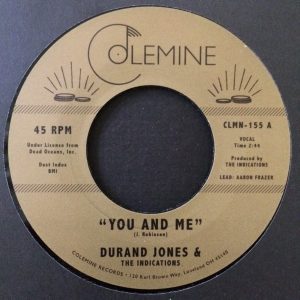
We really need to talk about your incredible version of Penny & the Quarters’ “You and Me.” As one of the most uncanny songs ever, whose idea was it tackle such a recording?
Aaron: I’d first heard the track sometime about five years ago. What struck me most was how plain and beautiful the recording was. It’s clear it was all done through a single microphone, with the amp somewhere towards the back of the room, the backup singers closer up, and Penny Sharpe right in front. It feels like a really honest translation of the performance, and fits the simple but moving lyrics. It’s a big idea done small, which was the foundation of our entire approach to making soul music, and it just gives me the feeling sharing a small moment with someone with someone really special to you. The high vocals are right in my range and I’m a sucker for unadorned but powerful love songs. When we decided to do a covers 45, it was my first choice.
Durand, despite being best known for vocal abilities, you spent many years prior studying classical saxophone at Indiana University. How do you pull from the same creative space with both singing and playing, or do they operate from separate places?
Durand: I haven’t played sax much since 2016 but when I do I find that it correlates to my singing. Mainly in the oral cavity. A goal of mine was always to “Sing through the horn!”
How did you first connect with Colemine Records? We’re big fans and really love what they’re doing. Whom else from the label should fans check out?
Blake: A really great record store in Bloomington, IN called Landlocked Music started stocking all the Colemine stuff pretty early on. I noticed the 45s all had an Ohio address on them, and I was really excited there was a label doing that type of thing so close by. We started talking to Terry [Cole, founder of Colemine Records] over email and he was really supportive of what we were doing. I love the Wesley Bright & The Honeytones’ 45 [“Happiness”] and The Jr. Thomas & The Volcanoes record [Rockstone] has to be one of the best Rocksteady albums to come out last year.
Durand mentioned in the Albuquerque Journal that the band essentially formed because he wanted to “make friends,” adding, “It really made this shy, introverted dude find his space in the world. Prior to playing music together, we first got together to listen to soul music, playing 45s for one another.” It seems like a love for record collecting is a shared passion among all group members, as you’ll share records on Instagram from time to time.
Durand: I did not get into record collecting until I met these guys. Someone will find a store and we’ll go and check it out. The record collecting started out as a big influence. When we were in Bloomington, we would share [records] with one another on Sundays. But now being spread all over the country it’s hard to do that. Mostly a lot of where we can hear what each of us are listening to is Spotify on the Indications Inspirations playlist.

Your songs are all over the soul spectrum, from sweet soul to sweaty funk. What type of music did you listen to growing up?
Blake: I remember filling out a time capsule in 2nd grade and saying my favorite song was “Dancing Queen” by Abba. I think I was really drawn in by the arrangement and the melody. The way the piano plays off the voice is great. My older brother gave me an Outkast CD for my 10th birthday and I listened to that religiously. Again I was really drawn in by the production. I felt like I could hear all the little intricacies in the mix, and that was really eye-opening for me.
What directions, if any, do you see your music moving towards? Will it be more sweet soul, heavy funk, or all of the above?
Durand: Right now it’s heading into a more sweet sound. Many of the times when I sang for the record I kept getting the comments “too dynamic” or “too much velocity.” [It’s a] much different style of singing from the first album and what it took to sing those songs each night. So I had to change my approach and method. At first I felt a little discouraged because it was tough! But then [I would be] listening to Irma Thomas and [hearing] her not letting any genre trip her up. So I took the challenge.
Durand Jones & The Indications’ new album, American Love Call, is available on all formats March 1st 2019. We’d like to thank Durand and company for their time and insight on a career we cannot wait to absorb.
Interview by David Ma, foreword by Brandon Roos for Needle to the Groove Ent.
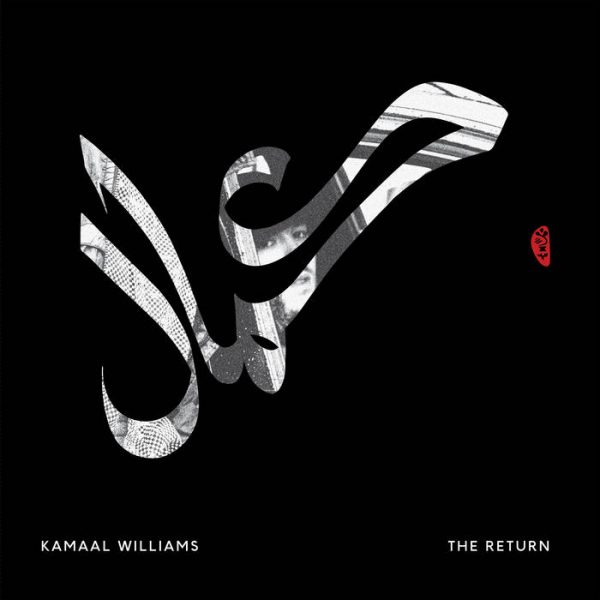
Kamaal Williams – The Return (Black Focus Records)
Kamaal Williams – The Return
Black Focus Records – 2019
While The Return may be a debut of sorts, it certainly makes reference to the sound it’s following.
In November 2016, pianist and producer Kamaal Williams, an alias for Henry Wu, paired up with the vastly talented drummer Yussef Dayes as Yussef Kamaal. Their debut, Black Focus, is arguably the finest statement yet to emerge from London’s red-hot jazz scene in recent years. Accessible without sacrificing incredible musicianship and virtuosity, Black Focus nodded not only to the jazz fusion work of artists like Joe Zawinul and Herbie Hancock but provided space for various strains from the UK’s electronic music scene, broken beat in particular.
Out of nowhere, the band said they’d no longer be performing which left Dayes and Wu playing the music with separate ensembles. Though Wu has stated there’s no animosity, there’s never been a solid explanation for why this group dissolved right before assuming the mantle for Britain’s impending jazz takeover.
With a similar iconography, The Return shows Wu is willing to acknowledge and carry on the legacy of Black Focus (his recently minted label carries the same name). On the album’s Bandcamp page, it’s stressed that “The Return is a natural evolution from the Yussef Kamaal project, mining the influence of visionary jazz but blended with all kinds of texture, sounds and signals from the over-saturated London streets.”
Indeed, it does seem like atmosphere and texture are a sonic priority. “Catch the Loop” is all about Williams and his cohorts establishing a sonic world then working to flesh it out as much as possible in the moment. Makaya McCraven’s recent work Universal Beings comes to mind, which similarly settles within a series of lush, contemplative musical pockets.
Wu’s keys certainly draw through lines to fusion, yet it’s a reference that only speaks to one color within this sonic mosaic. As Wu shared in an interview with Red Bull, “We’ve grown up on grime, garage, broken beat, drum ‘n’ bass and house… There’s too many other new elements in there to just say it’s jazz. I just call it music from London, because that’s what it is, undoubtedly.” Wu’s own entry point is fascinating, as he mentions in the same interview that he encountered jazz first through electronic music. That likely explains why the jazz tag might not feel as obvious on this project as it does on albums by London contemporaries like Nubya Garcia or Shabaka Hutchings.
“LDN Shuffle” is a standout. The drumming brings a frenetic start that the keys seem reluctant to accept, opting instead to wade in a woozy, two chord refrain. The song burns slow, waiting for liftoff until guitarist Mansur Brown provides a psychedelic freakout at the song’s mid point. After the guitar falls into a sea of reverb, Wu’s chords are accompanied by a funky lead. The bass sits back, aiding the energy with short melodic bursts. The song slowly but surely fades out, making the momentum almost feel imagined.
While a handful of tracks on The Return pick up momentum and eventually catch fire, others take on a more pensive, meditative quality. “Situations (Live in Milan)” captures this trio’s more contemplative side. Wu finds a simple progression to jam on, and sits in that space as the drums find their way around his statement, accompanied by short flourishes that aid in the song’s dreamy soundscape. Right as the song seems ready to take off, it fades to silence.
Much like Black Focus, The Return is a great gateway record. Give it a shot if you love the sound of broken beat and want more improvisation, or if you’re interested in the contemporary sound of jazz-influenced artists like Thundercat, Robert Glasper, or Hiatus Kaiyote.
by Brandon Roos
@brandiathan