
Teeko & Diamond Ortiz – Real Ones (SFC) – NTTG-001 – 7″ 45rpm
Our first limited release with Teeko featuring Diamond Ortiz.
Scheduled for official release on Friday, Dec. 16th. Items will ship on Tuesday, December 13.
.
ABOUT THE RELEASE

Teeko is a San Francisco based producer & DJ and half of the the future funk duo Starship Connection. On this collaboration he’s joined by native Bay Area funkster Diamond Ortiz (MoFunk) for a fine serving of synthesized boogie/funk fresh out of California. Teeko performs on a Roland JX3P, Mini-Moog Voyager, & Talkbox. Diamond Ortiz performs vocals with a Microkorg XL with a Rocktron Banshee Talkbox. Real Ones is a lively vocoder slapper written & performed by Teeko with DJ friendly instrumental on the B side.
UPCOMING EVENTS
| Date | Artist | Location | Venue | Time |
|---|---|---|---|---|
| 12/1/16
12/3/16 12/5/16 12/6/16 12/8/16 12/9/16 12/10/16 12/14/16 1/14/16 03/10/17 |
Aki Kumar
Diamond Ortiz Aki Kumar Aki Kumar Aki Kumar Aki Kumar Allen Johnson RyStylz, Basura, Allen Johnson, Dave Ma Aki Kumar, Basura, David Ma, Allen Johnson Teeko |
Campbell, CA
Los Angeles, CA Aptos, CA Fremont, CA Campbell, CA Martinez, CA San Jose, CA San Jose, CA San Jose, CA San Francisco, CA |
Little Lou’s
EICid Aptos Street BBQ Mojo Lounge Little Lou’s Armando’s Headley Club Cafe Stritch Cafe Stritch Mezzanine |
7:30 PM
9:00PM 6:00 PM 8:00 PM 7:30 PM 8:00 PM 9:00 PM 9:00 PM 9:00 PM |
MUSIC BITES
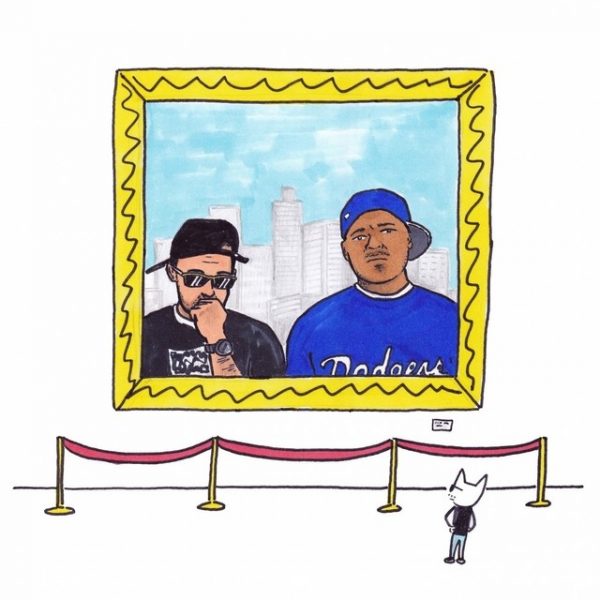
PUTS – Sincerely, the P Review
People Under the Stairs – Sincerely, the P
Piecelock 70 – 2019
In a genre that’s less than fifty years old, the idea of legacy is tenuous. Rap’s fetishization of youth culture and the countless examples of rappers ungracefully aging creates an environment where multi-decade careers are exceedingly rare. In this way, Thes One and Double K, known collectively as People Under The Stairs, have put together one of the more impressive runs in rap history. Since 1998 they’ve dropped a slew of dope releases and become a fixture on the hip-hop / electronic festival circuit— all the while maintaining 100% of their artistic integrity.
PUTS’ new album Sincerely, The P is supposedly their last (rapper and boxer retirements should always be taken with a grain of salt). On this new record, the LA rap duo stays true to form, as heard on the main attraction track, “Sincerely.” The production is well crafted with sampledelic collages that manage to hypnotize without putting you to sleep (like some the coffee shop low-fi fodder out there). Thematically Sincerely, The P is an unapologetic nostalgia record. I’m not the biggest fan of rearview gazing rap records but I appreciate that they are not making craven attempts to sound young or hip. Thankfully there are no forced trap drum patterns or autotuned vocals to be found. Stand out cuts include the trunk rattling “Hard,” the feel-good anthemic “Reach Out,” and the uptempo ditty “The Red Onion Wrap.”
At its best Sincerely, The P is all the good vibes that made old heads like myself fall in love with rap. Unfortunately, the record also has a ultra-literal sensibility that feels more than a bit dated (see: The Effects of Climate On Densely Populated Areas). Overall there have been worse swan songs and props are certainly in order—People Under The Stairs is exiting on an unmistakable high note.
by Demone Carter – 2019
@lifeafterhiphop
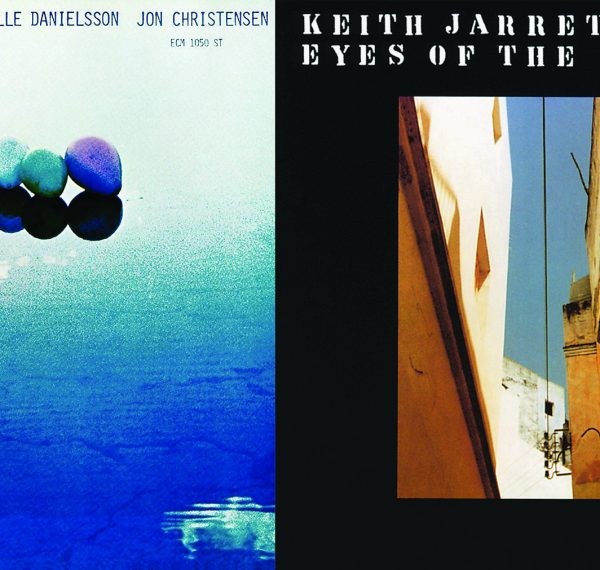
Keith Jarrett’s Tale of Two Quartets
Keith Jarrett
Belonging (1974, ECM)
Recorded 4/24-25, 1974 in Oslo, Norway
Eyes of the Heart (1979, ECM)
Recorded 5/1976 in Bregenz, Austria
You’d be hard pressed to find a harder working jazz artist in the 1970s than Keith Jarrett. Whether it was his solo piano albums or endeavors into the classical world – not to mention performing and recording with two quartets concurrently – Jarrett released no fewer than 30 albums over the entire decade across three different labels.
With a catalogue that vast, it can be difficult to understand his trajectory and impact on jazz once he struck out on his own after an acclaimed stint with the Charles Lloyd Quartet in the late 60s. But a side-by-side comparison of two releases from this era provides a fascinating snapshot of an artist in transition. Belonging captures the unexpected rise of his European quartet while Eyes of the Heart chronicles the fractured final gasps of his American quartet.
Belonging rose out of a suggestion by ECM Records head Manfred Eicher to pair Jarrett with Norwegian saxophonist and labelmate Jan Garbarek. Eicher likely had little idea how immediately fruitful the pairing would be. All recordings here are first takes, and in Ian Carr’s Keith Jarrett biography, Garbarek shares that the entire session was finished in two hours, adding “it was a big thing for me to play with Keith. I loved his music very much, and to have this opportunity – I was so concentrated” (76-77). Even more impressive is the fact that these songs capture the first time the group’s rhythm section – Palle Danielsson on bass and John Christensen on drums – set eyes on the music. Jarrett’s one-take mentality, inspired by his tenure with Miles Davis, makes the music feel especially fresh, light yet fine-tuned.
“Spiral Dance” carries the patient tension of a string slowly being tightened until Garbarek’s sax lightens the proceedings. Danielsson ably finds his way up and down his bass, with Jarrett comping and Christensen’s drums delightfully coloring along. There seems to be a pervasive spirit of collective listening. “Blossom” in turn shows the quartet’s ability to play slowly and tenderly. The interplay between Garbarek and Jarrett is particularly notable here.
While Belonging signaled a triumphant intro for Jarrett’s new European unit, an ensemble where he didn’t feel the need to constantly be edgy, Eyes of the Heart, recorded in 1976 but not released until 1979, captures the sad denouement of his American Quartet, which included Dewey Redman on sax, Charlie Haden on bass, and Paul Motian on drums.
A double disc that only contains three sides, Eyes of the Heart was supposed to include a performance of the group’s acclaimed “Survivors’ Suite.” However, as Jarrett reveals in Carr’s biography, group miscommunication marred their performance that evening in Austria.
This moment comes into focus on side two, which starts with a seeking vamp, similarly somber to side one but with rays of sunshine sprinkled at the intro. Motian appears in a flash, brash cymbal crashes and snare rolls adding a shade of urgency. Jarrett’s solo widens the scope, pleading with a wider tonal palette, then ruminates again. With no context, he’s voicing uncertainty; knowing the backstory, it becomes apparent this is where Jarrett’s waiting, ever more impatiently, for input from Redman that never arrives. The piano fades to one phrase, then opens again – to no avail.
When Redman finally plays, to heavy applause, his lines soar, power notes and speedy runs. There’s a touch of Eastern mysticism and a hazy distance that adds tinges of exotic danger to his horns as it bites more, unraveling bitter spits amidst cluttered, musical wayfinding. Motian’s whole body is into the kit.
The evening’s missed connections converge in a powerful way on side three, comprised of three encores. “Encore-a” pounds with joy. The quartet feels careless and home free. There’s an ecstatic undertone, Jarrett’s gospel-esque voicings inspiring Motian to action like a Quaker shaking down the aisle, his hands delivering patient electricity. “Encore-B” showcases Redman and Jarrett trading phrasings, a sometimes playful back-and-forth that also carries tense undertones. It’s Jarrett at solo piano for “Encore C.” Knowing the context now – that the group would be no more in a month’s time – it’s hard not to hear his finale like a parting kiss. Applause, and on to the next for Jarrett.
When asked about the recording, Jarrett told Carr “ ‘I remember too vividly how stupid that whole situation was. I can’t listen to the music objectively. All I do remember is why that vamp is so long, and why this was happening.’” Carr adds “That experience had made him realize he was ‘alone out there’ and that it was not a quartet any more” (83). For these reasons, Jarrett asked ECM head Manfred Eicher to initially withhold release, though he did finally relent.
In the years since, Jarrett has found worldwide acclaim with yet another group, his Standards Trio featuring Gary Peacock on bass and Jack DeJohnette on drums. Compared to the acoustic, more classicist approach of this ensemble, it can be striking how wide-open Jarrett’s work once was with his American quartet, and how greatly varied his output was in the first decade of his experience as a bandleader.
When diving into the American quartet, Expectations is a great entry point that helps preface their masterful album The Survivors’ Suite. If you like what you hear on Belonging, Personal Mountains showcases the European Quartet’s fabulous interplay live.
Words by Brandon Roos – 2019
@brandiathan