
Teeko & Diamond Ortiz – Real Ones (SFC) – NTTG-001 – 7″ 45rpm
Our first limited release with Teeko featuring Diamond Ortiz.
Scheduled for official release on Friday, Dec. 16th. Items will ship on Tuesday, December 13.
.
ABOUT THE RELEASE

Teeko is a San Francisco based producer & DJ and half of the the future funk duo Starship Connection. On this collaboration he’s joined by native Bay Area funkster Diamond Ortiz (MoFunk) for a fine serving of synthesized boogie/funk fresh out of California. Teeko performs on a Roland JX3P, Mini-Moog Voyager, & Talkbox. Diamond Ortiz performs vocals with a Microkorg XL with a Rocktron Banshee Talkbox. Real Ones is a lively vocoder slapper written & performed by Teeko with DJ friendly instrumental on the B side.
UPCOMING EVENTS
| Date | Artist | Location | Venue | Time |
|---|---|---|---|---|
| 12/1/16
12/3/16 12/5/16 12/6/16 12/8/16 12/9/16 12/10/16 12/14/16 1/14/16 03/10/17 |
Aki Kumar
Diamond Ortiz Aki Kumar Aki Kumar Aki Kumar Aki Kumar Allen Johnson RyStylz, Basura, Allen Johnson, Dave Ma Aki Kumar, Basura, David Ma, Allen Johnson Teeko |
Campbell, CA
Los Angeles, CA Aptos, CA Fremont, CA Campbell, CA Martinez, CA San Jose, CA San Jose, CA San Jose, CA San Francisco, CA |
Little Lou’s
EICid Aptos Street BBQ Mojo Lounge Little Lou’s Armando’s Headley Club Cafe Stritch Cafe Stritch Mezzanine |
7:30 PM
9:00PM 6:00 PM 8:00 PM 7:30 PM 8:00 PM 9:00 PM 9:00 PM 9:00 PM |
MUSIC BITES
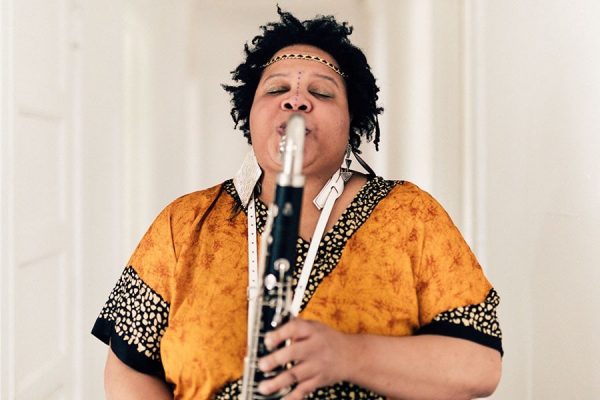
Citing Sources with Angel Bat Dawid: Records, Chicago, & avant-garde jazz
Citing Sources with Angel Bat Dawid: Records, Chicago, & avant-garde jazz
In 2014, Angel Elmore, known creatively as Angel Bat Dawid, cashed out of an office job to pursue music full-time, diving fully into a practice that held a special place in her life for years. It was a transformative time for her, as she started digesting the work of jazz and avant-garde giants from the collective AACM, the Association for the Advancement of Creative Musicians. Her creative exploration and growing fascination with the avant-garde achievements made by musicians in her hometown directly led to what you hear on The Oracle, released earlier this year.
There’s also an unsung component to that point in her life. That same year, she took a job at Hyde Park Records on Chicago’s South side.
“You want to talk about the treasures that Black people have? The stuff that would come in that store… This dude came in with mint condition Black Panther newspapers,” she joyfully recounts, highlighting the range of unearthed gems that would enter the shop. “I feel like it was a college education. It was the best job I ever had.”
Angel recently left Hyde Park prior to releasing her debut, The Oracle, but she maintains that records remain a key part of her creative process. Her album has earned praise from outlets like All About Jazz, Pitchfork and Rolling Stone – and spawned a fabulously informative conversation with her hometown Chicago Reader. Rather than dive into her back story, Needle to the Groove instead asked Angel to cite her sources. Below, she speaks on some of the artists, and records, that inspired what became The Oracle.
I want to touch on your love for Sun Ra, since you’ve mentioned he was an immediate inspiration from the moment you came into contact with his work. Are there any songs or albums that come to mind when you think of what Sun Ra means to you?
Sun Ra is a huge influence. I found out about him because of my father. He had Space is the Place in the house. We watched it on VHS and I was like “What in the world…”
The way I see my music is the same way that he did. He saw it as a different level of consciousness. He was a myth scientist. I never understood what he meant by that until I started delving into mythology and what mythology really means. I studied Sun Ra a lot. I’m using mythology in the same way.
I don’t know if Pirate Bay is still around, [but] a few years ago, I was up on Pirate Bay hardcore. [Laughs] One day I downloaded his entire discography. I made it my thing to play Sun Ra all day at my house, even when I wasn’t there. I was completely oversaturated. I would listen to it when I would go to bed, and I would put [all the songs] on random.
One Sun Ra record I really like is actually a compilation that came out a few years ago. It’s Marshall Allen’s playlist of what he thinks are the best Sun Ra songs [In the Orbit of Ra]. “Astro Black” is one of my favorite Sun Ra songs. I love Nuclear War, that whole album.
Is there anything from your labelmates at International Anthem or within the current Chicago jazz / avant garde scene that influenced what you created with The Oracle?
Ben Lamar Gay is a huge influence. He came out with an amazing record last year called Downtown Castles Can Never Block the Sun.
One great thing about the artist community here in Chicago is there’s a lot of support. If you get involved in the avant-garde scene, you’re gonna have a lot of people who will encourage you and even be like “Hey, we got a gig. You wanna do it?” Ben’s been like that for me.
Of course, Makaya McCraven. I know him just from being out on the scene, but what he’s doing too, as far as doing improv and going back and editing it, looping stuff, it has this hip-hop feel to it. Miles Davis’ Bitches Brew was made in that same way, where they did a long, live jam session, then they cut it up and looped stuff. It’s really cool to see musicians like Makaya doing really cutting edge stuff like that.
Another huge influence – this isn’t Chicago – but I have to say Shabaka Hutchings from London. With this new jazz wave from younger artists, there’s three places everybody’s talking about: Chicago, London and South Africa.
Before your work as Angel Bat Dawid, people might be surprised to know you created in the world of hip-hop. Who are some key hip-hop influences for you?
Hip-hop is very important to me, especially when I started. Nas is one of my favorites. Lyrically, I just can’t think of anyone who puts it down as hard as Nasir Jones. He’s a master storyteller. I was rapping at the time, so I would really listen to the way he’d rap and write down his verses. I would study Nas big time.
Whether people like me or not, I gotta put Kanye [West] up in there. Production-wise, Kanye is out. Without thinking of him as a personality, if I just listen to Yeezus… Dude was taking beats and flipping them within a beat. He’s always been experimenting. I wonder if that has a lot to do with him being from Chicago.
As a vinyl collector, do you have a favorite title in your collection?
One of my most prized, precious records is Music is the Healing Force of the Universe by Albert Ayler. It was put out on Impulse! Records. That kind of tells you about that time period, that an album like that could be on Impulse! John Coltrane was on Impulse! and he really loved what Ayler was doing. I think he really played a role in getting him on that label. When I finally got my hands on a copy I was like “I don’t care how much it is. I am getting it!” That record is very, very important to me.
You’ve spoken on the significance of discovering the collective works of the Association for the Advancement of Creative Musicians (AACM). Are there any artists or works that were key to you falling in love with their collective work?
It’s not really a specific album. The way that they do everything really influenced me and a lot of my friends. We even started a collective based off our love and respect for AACM called Participatory Music Coalition. I’ve had the great honor to meet a lot of people in AACM, because a lot of them still live here.
I would say Art Ensemble of Chicago, which comes out of AACM. Bap-tizum is amazing. There’s another one called Chi Congo, which is like a Latin thing.
Like Sun Ra, they knew we have to change the way we look on stage. I was always drawn to that, the theatrics – “why are they painting their face now? What are they tapping into?” Art Ensemble of Chicago is a huge influence for me. I always like to talk about them because I’m not doing anything new. AACM laid the foundation for me to be able to do what I do.
The Oracle, Angel Bat Dawid’s debut for International Anthem Records, is available digitally via Bandcamp.

The Gow Dow Experience – Transcending Jazz
The Gow Dow Experience
73-74-75 (The Gow Dow Experience Productions) (Private Press)
Released February 11, 1973
Diving into the history and context behind the incredibly rare private press recording 73-74-75, the only recording from The Gow Dow Experience, it’s difficult to judge the music as purely entertainment. That’s because this album was merely one component of the greater “Gow Dow” philosophy of Black unity and empowerment established by Dr. James Benson, the music’s composer and a former professor of Black Studies at Cal Poly Pomona.
An archived story by Barbara Smith via Precinct Reporter helps set the context around Cal Poly Pomona at the time: “The year 1969 saw a revolution rocking our country: a war being fought on foreign soil and there was civil unrest at home. The shifting landscape in the country was reflected on university campuses where the need for diversity cried out. Cal Poly Pomona was one such campus with an active recruitment campaign, and in 1969 the first African-American students, many from the inner cities of southern and northern California, arrived at the school to begin their educational adventure.” The Gow Dow Experience rose directly out of those transformative, tumultuous years.
As Benson writes in the album’s liner notes, the group from sense of “Black Functionalism,” which he elaborates as “doing some consistent kind of activity in the community to show our concern and responsibility as black students, brothers and sisters… within a few ‘weeks’ we went into action – free public concerts, prisons, festivals, churches, schools, educational TV, radio, weddings, etc.” This album stems from those community efforts, taking place from 1969 through 1973.
While the music isn’t the most studied – Benson states on the back cover “these students had very little (if any) formal training” – what makes it special is the tremendous sense of empathy and collective listening on display. The compositions are also incredibly lush and layered.
With the group’s sense of purpose in mind, “Nigeria West Africa,” and its heavy percussion and scattered chants, feels like a historical invocation, a way for the ensemble to connect present day with past heritage. “Song For My Black Mother,” is the first glimpse of Benson’s thoughtful ear, which finds space for all pieces of his ensemble to shine. While this song largely sits in a pocket, there’s lots of movement to the short but memorable “Barry Rae.”
B side opener “Malcolm IX” is the freest musical passage on the album. It’s notable that the song holds a pervasive sense of compassion and unity even within the throes of the saxophone’s overblown low bleats and high cries. Guitar and piano seem to call back in an active dialogue. Closer “Brother Don” contains some great contrasting dynamics from the onset, with brass stabs sitting brilliantly in opposition to the drum rolls that immediately precede them.
On the record’s back cover, Benson distances the collective from a strict jazz designation. “The philosophy and concepts coming from the Gow Dow Experience are those of spontaneous, unstructured, free flowing experience, yet having its own spiritual values. It has nothing to do with the word ‘jazz’… The Gow Dow Experience is a way of listening to creation. It is an ongoing experience. It defies categorization and means to demystify and illuminate black experience.”
If a copy of this private press proves too elusive (or cost prohibitive), you can get a taste on the compilation Super Cool: California Soul II, released on CD and double LP in 2007 on Luv ‘N Haight and re-released digitally via Ubiquity in 2015. That collection features the group’s cover of the Gene McDaniels tune “Compared to What,” best known for its classic performance by Les McCann and Eddie Harris at the 1969 Montreaux Jazz Festival. The Gow Dow take is a cool, laid back counterpoint to the urgent passion of the McCann / Harris version, a slow burner of gradual intensity with a funky bassline as its stylistic centerpiece.
73-74-75 is a fascinating artifact of Black empowerment and unity, a creative, community-minded response to troubled times that points to music’s ability not only to entertain but to heal.
Words by: Brandon Roos
@brandiathan